Min Aung Hlaing Poised for Presidency in Leaked Junta Cabinet Reshuffle
 TZP News
 THE ZOLAND POST | March 16, 2026
Senior General Min Aung Hlaing is set to assume the presidency under a purported transitional roadmap revealed on Monday, signaling a high-stakes move by the military council to secure a political exit via its planned general elections.
The leaked list of legislative and cabinet appointments suggests a significant reconfiguration of the junta’s upper echelons. According to the document, Vice-Senior General Soe Win will succeed Min Aung Hlaing as Commander-in-Chief of the Armed Forces, effectively separating the roles of head of state and military chief for the first time since the 2021 coup.
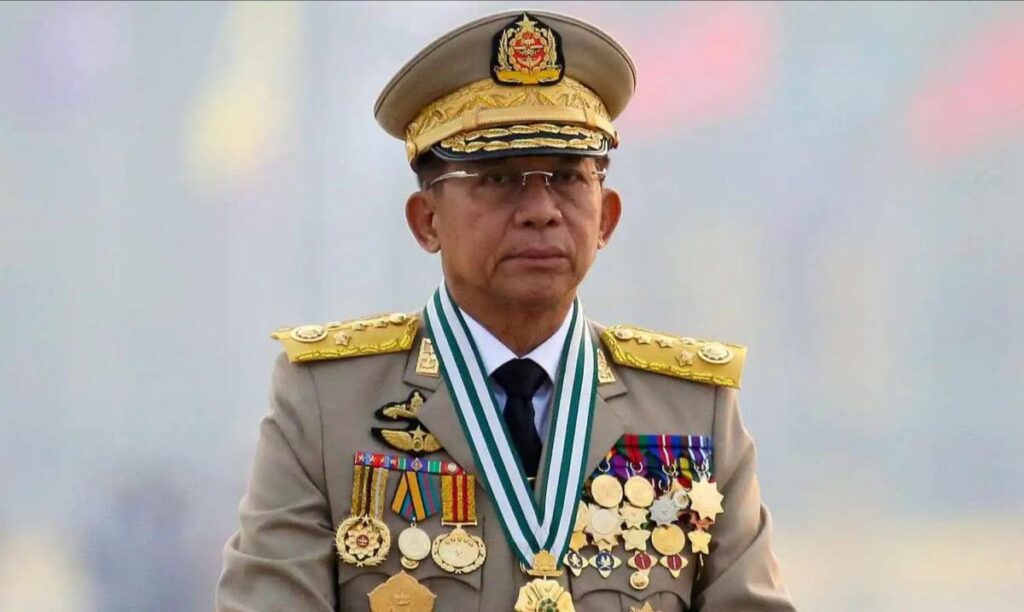
Political observers view this reshuffle as a calculated power-sharing maneuver designed to institutionalize military rule under the guise of a civilian administration. However, the National Unity Government (NUG) and allied revolutionary forces have already dismissed the move as a diplomatic facade, reiterating that they will not recognize any government born of the junta’s “sham” electoral process.
The proposed administration places key loyalists in pivotal roles. The list designates Nyo Saw and Daw Dwe Bu as Vice Presidents, while veteran regime stalwarts are tipped to lead the bicameral parliament. Former Brigadier General Khin Yi is slated to chair the Pyithu Hluttaw (Lower House), and Lieutenant General Aung Lin Dwe is named as the speaker of the Amyotha Hluttaw (Upper House).
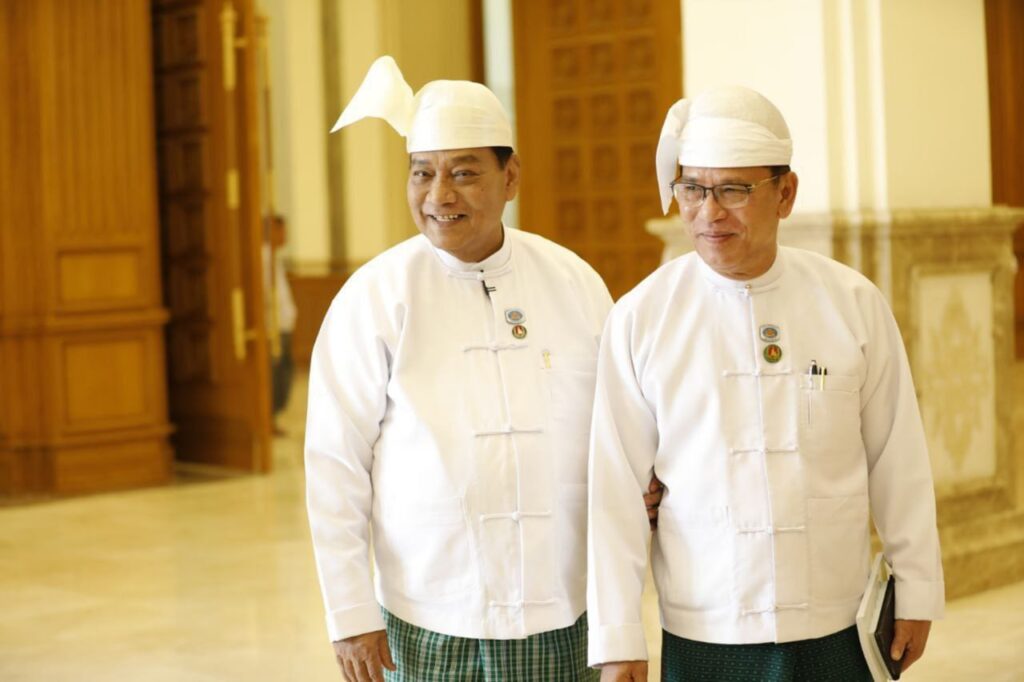
The executive branch remains dominated by familiar faces within the regime’s inner circle. Major General Zaw Min Tun is set to lead the Ministry of Information, with Lieutenant General Ni Lin Aung taking the helm at Border Affairs. U Soe Thein, another regime veteran, is designated as the Minister of the President’s Office.
The reshuffle extends to regional governance, with new chief ministers reportedly designated for the Yangon, Kayah, Ayeyarwady, and Magway regions. Analysts suggest this sweeping redistribution of positions serves to reward hardliners and consolidate Min Aung Hlaing’s personal power base as he prepares to transition from military dictator to a formal political role.
Far from resolving Myanmar’s deep-seated crisis, the junta’s attempt to impose a manufactured government is expected to intensify the current political and military deadlock, further alienating a population that remains steadfast in its resistance to military rule.