Timor-Leste Judiciary Moves to Prosecute Myanmar Junta for War Crimes
 TZP News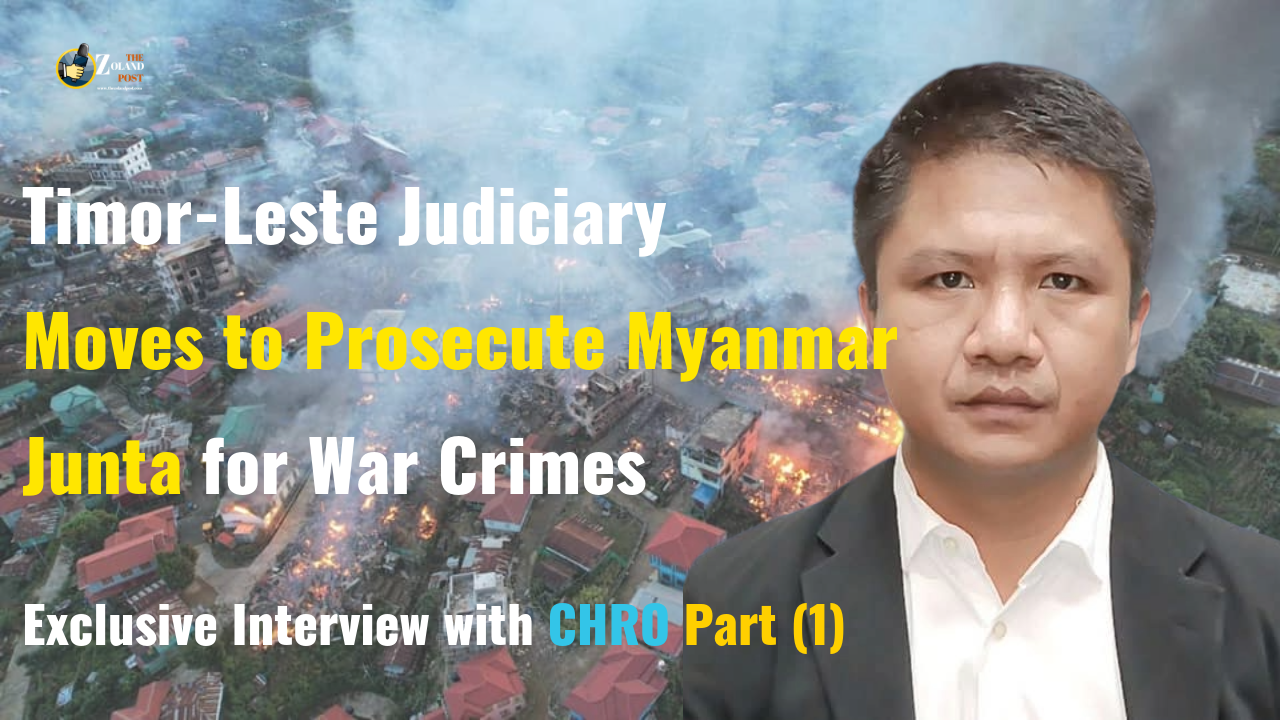
THE ZOLAND POST | Exclusive Interview (Part 1)
In a watershed moment for international accountability, the judiciary of Timor-Leste has officially accepted a landmark legal petition to prosecute leaders of the Myanmar military junta for war crimes. This historic development follows years of clandestine and perilous documentation by the Chin Human Rights Organization (CHRO), offering a glimmer of hope to a population that has endured five years of relentless atrocities since the 2021 coup.
While the international community has often struggled to move beyond rhetoric, this legal breakthrough raises a critical question: will this prove to be the “historic turning point” the people on the ground have long demanded?
The road to the courtroom was fraught with geopolitical and physical hazards. To reach this stage, advocates had to navigate the rigid diplomatic constraints of ASEAN’s “non-interference” policy—a principle that has frequently served as a shield for regional autocrats. Beyond the halls of power, the challenge of gathering verified evidence was even more daunting. Amidst a campaign of scorched-earth tactics, indiscriminate airstrikes, and the systematic burning of villages across Chin State, CHRO teams risked their lives to compile a dossier of evidence that meets the rigorous standards of international jurisprudence.
In this exclusive interview with The Zoland Post, CHRO spokesperson Salai Mang Hre Lian pulls back the curtain on this grueling legal crusade. He details the meticulous process of forensic documentation in a war zone and highlights the indispensable role of resilient civilians who provided the testimony necessary to challenge the junta’s culture of impunity. This first installment of our series explores how a small Southeast Asian nation and a dedicated human rights collective managed to bypass diplomatic paralysis to bring Myanmar’s generals one step closer to justice.